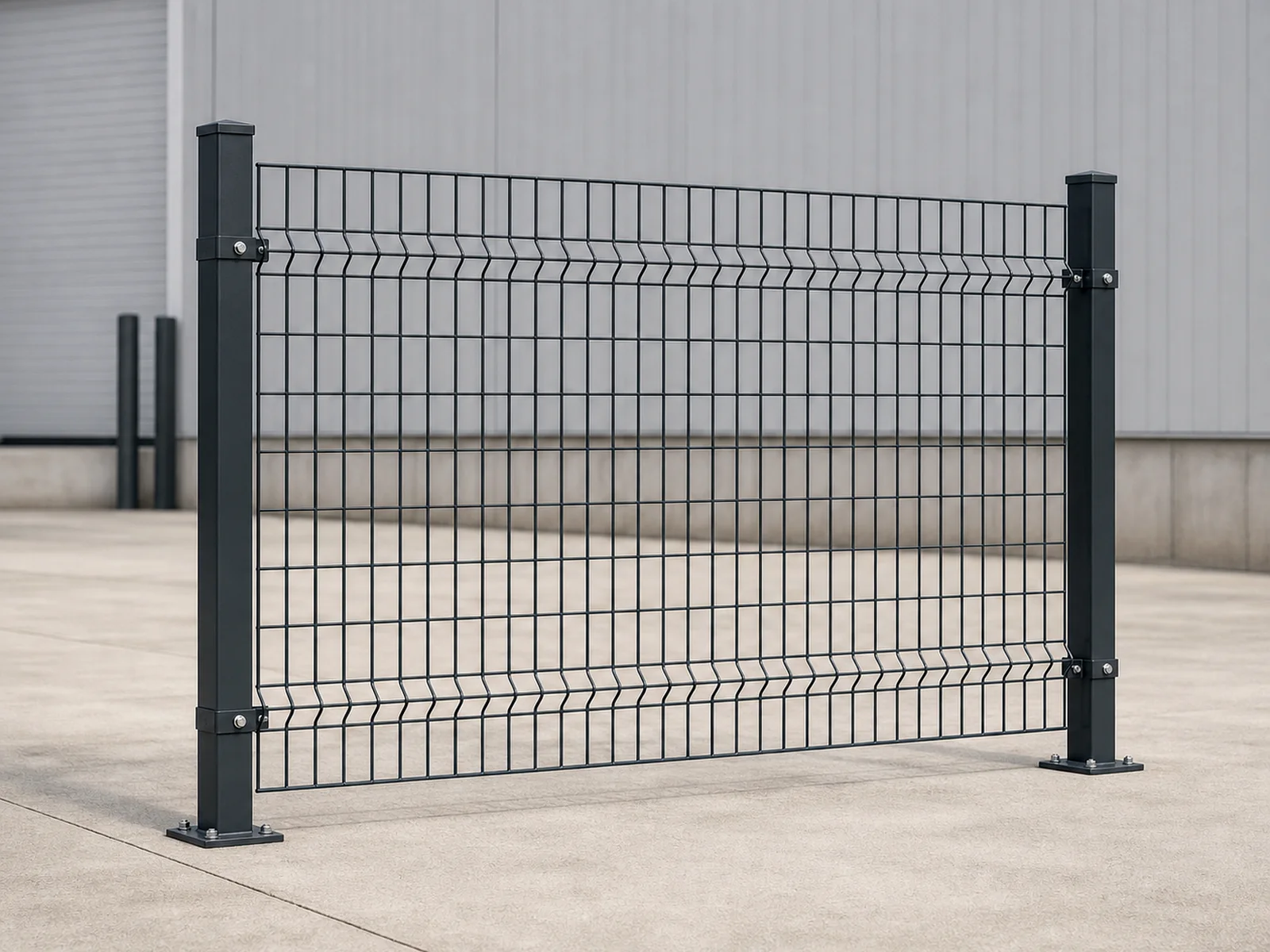
656 or 868 twin wire fence

656 vs 868 Twin Wire Fence: What Buyers Should Confirm

A buyer selector for double wire fence projects comparing 656 and 868 panel structures, posts, clamps, gates and coating.

View Products
656 and 868 twin wire fence panels with posts and fittings

Quick answer

Buyer Summary

656 and 868 describe common twin wire fence structures. The buyer should compare the same mesh opening, panel height, wire structure, post, clamp or flat bar, gate scope, coating and packing before judging price.

Technical guide

Selection Points

Use these points to compare suppliers and send an RFQ with enough information for a useful reply.

01

Use 656 for general rigid boundaries

656 panels are commonly selected when a buyer needs a flat welded panel system with practical rigidity and controlled landed cost.

  • Confirm panel height and width.
  • Match the post and clamp system to the panel.
  • Include gates and corners in the same RFQ.
02

Use 868 when stiffness is the priority

868 panels use heavier horizontal wires and are usually compared when stronger panel stiffness is required.

  • Confirm the horizontal and vertical wire diameters.
  • Compare panel weight and packing quantity.
  • Check post section and fixing spacing.
03

Compare the full fence system

A 656 price and an 868 price are not comparable unless the accessory and coating scope is the same.

  • State mesh opening, panel height and total length.
  • List posts, clamps, caps, bolts and gates.
  • Confirm galvanized and powder-coated finish choices.

Quotation data

Useful Data Before Quotation

Decision Point 656 Twin Wire Fence 868 Twin Wire Fence
Wire structure Twin horizontal wires with lighter structure Twin horizontal wires with heavier structure
Best starting use General school, park, commercial and public boundaries Sports, public facilities and heavier-duty perimeters
RFQ focus Panel, post, clamp, coating and gate scope Wire structure, post section, clamp spacing and packing weight
Price comparison risk Missing accessories make the price look lower Higher wire weight changes freight and handling

Related products

Review product specifications and matching accessories before finalizing the RFQ.

Twin Wire Fence

Double Wire Fence

Twin wire fence panels in 656 or 868 structures for schools, factories, sports fields and public facilities.

View specifications
Welded Mesh Fence

3D Welded Mesh Fence

V-bend welded wire mesh fence panels matched with peach or square posts for residential, commercial and light industrial perimeters.

View specifications
Roll Top Fence

BRC Roll Top Fence

Safe rolled-edge welded mesh panels for parks, schools, housing communities and public areas.

View specifications
Accessories

Fence Accessories

Posts, caps, clamps, bolts, gates, braces, feet and security extensions for complete fence system orders.

View specifications

FAQ

Common Buyer Questions

These answers help reduce repeated clarification before price, packing and delivery details are prepared.

What does 656 mean in twin wire fence?

656 is commonly used to describe a twin wire panel structure. Buyers should still confirm the actual horizontal wire, vertical wire, mesh opening and tolerance before ordering.

When should a buyer choose 868 instead of 656?

Choose 868 when the project values higher panel stiffness or impact resistance more than lower panel weight. The final decision also depends on post, fixing, gate and coating scope.

What should be included in a twin wire fence RFQ?

Include 656 or 868 structure, mesh opening, panel height and width, total length, post type, clamps or flat bars, gates, coating, packing and destination.

Technical RFQ

Send specifications for a comparable quotation.

Include product type, size, coating, quantity, accessories, destination country or port and reference photos if available.

WhatsApp
WhatsApp
WhatsApp
Scroll to Top