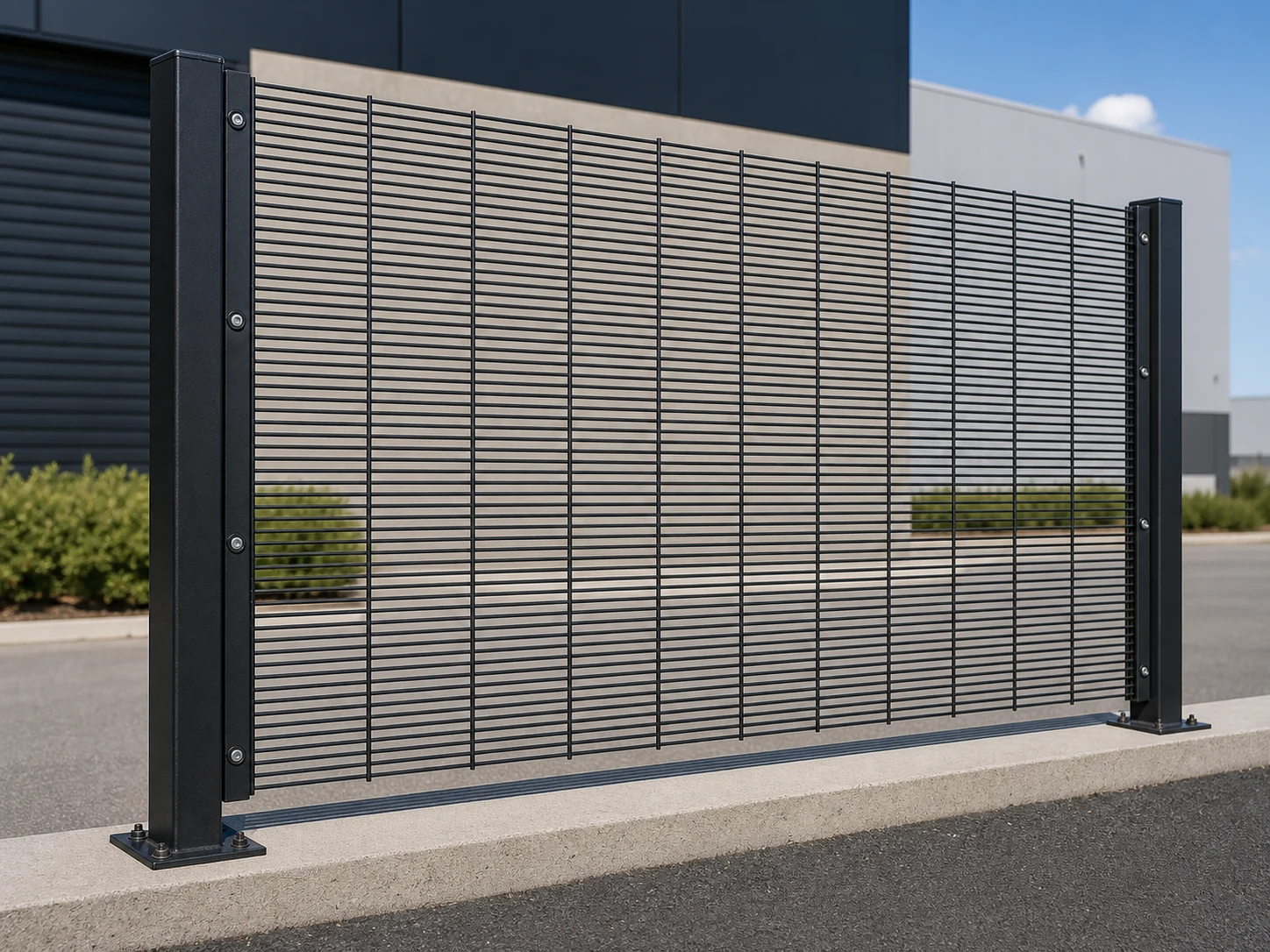
Layered perimeter selection

High-Security Perimeter Layers: Fence, Concertina and Barrier Selection

A scope-planning guide for buyers comparing rigid security fence, airport perimeter fence, concertina topping and project-defined barrier systems.

View Products
layered high security perimeter fence and concertina selection guide

Quick answer

Buyer Summary

A high-security perimeter should be scoped in layers: boundary definition, anti-climb or deterrent fence, controlled gates, optional security topping and any project-specific stand-off barrier. These products are not interchangeable, and final layout, safety clearances and compliance require the buyer or project engineer to approve the design.

Technical guide

Selection Points

Use these points to compare suppliers and send an RFQ with enough information for a useful reply.

01

Define each layer before choosing products

The fence line, gate control, top deterrent and stand-off zone solve different parts of the security brief.

  • State the site type and required boundary function.
  • Separate pedestrian, vehicle and service access.
  • Identify where visibility, anti-climb performance or stand-off distance matters.
02

Coordinate the rigid fence, gates and topping

Panel or pale type, total height, posts, foundations, anti-tamper fixing, gates and optional topping must work as one perimeter line.

  • Choose the fence body from the required visibility and anti-climb brief.
  • Match gate frames, hinges and locking interfaces to the selected posts.
  • Specify any concertina or barbed-wire topping as a separate approved layer with its own supports and safety controls.
03

Scope defensive barrier cells by module and fill

A geotextile-lined defensive barrier is a fill-cell structure, not a substitute name for a rigid fence or wire obstacle.

  • State cell dimensions, welded grid, wire, coating, liner and connection method.
  • Confirm fill material, foundation, stacking layout and end treatment in the project design.
  • List flat-pack, connector and handling requirements for the quotation and loading plan.
04

Treat wire obstacles as drawing-led systems

Coil or strand geometry, supports, anchors and terrain determine the supplied obstacle assembly. The catalog name does not imply a crash, penetration or delay rating.

  • Provide the approved route, cross-section and module or coil arrangement.
  • Define pickets, anchors, joining or tie wire and ground conditions.
  • Confirm controlled handling, installation access and any project-specific performance requirement.
05

Send one coordinated RFQ package

A coordinated scope reduces gaps between fence panels, posts, gates, topping, anchors and packing.

  • Include plan dimensions, corners and gate schedule.
  • List required components and interfaces.
  • Request quotation exclusions and confirmation items in writing.

Quotation data

Useful Data Before Quotation

LayerPossible Product RouteBuyer Must Confirm
Rigid perimeter358, palisade or airport fenceHeight, visibility, post, fixing and gates
Top deterrentConcertina or other approved toppingType, coil or strand layout, support and safety
Stand-off barrierProject-defined defensive barrierModule, fill, connection, foundation and layout
Wire obstacleProject-defined obstacle systemDrawing, anchors, spacing, access and compliance

Related products

Review product specifications and matching accessories before finalizing the RFQ.

High Security Fence

Airport Security Fence

Rigid mesh panels, heavy posts and security toppings configured for airport and critical-infrastructure perimeters.

View specifications
High Security Fence

358 Anti-Climb Fence

358 anti-climb mesh fencing panels with narrow apertures, RHS posts, flat bars, security bolts and optional topping.

View specifications
Security Fence

Palisade Fence

Strong vertical steel pales for high-deterrence industrial and utility perimeters.

View specifications
High Security Wire

Concertina Razor Wire

Clipped concertina coils in BTO and CBT blade profiles for high-security fence toppings and ground barriers.

View specifications
Defensive Barrier

Defensive Barrier

Collapsible welded-mesh cells with geotextile liners for rapid earth- or aggregate-filled protective walls.

View specifications
Specialized Wire Obstacle

Wire Obstacle System

Project-specific coiled-wire obstacle assemblies quoted only after layout and anchoring review.

View specifications

FAQ

Common Buyer Questions

These answers help reduce repeated clarification before price, packing and delivery details are prepared.

Can a security topping replace a rigid fence?

No. Topping is an optional layer and should be designed with a compatible fence, posts and approved safety arrangement.

Are defensive and wire obstacle systems standard products?

They can use repeatable components, but the final layout, connections, fill, anchors and safety scope are project-defined and require confirmation.

What separates a defensive barrier from a wire obstacle?

A defensive barrier uses lined welded-mesh cells that are filled according to the project design. A wire obstacle uses project-defined coils or strands, supports and anchors. They require different drawings and quotation inputs.

What information is essential for quotation?

Send the site function, layout, heights, gates, required layers, approved drawings where applicable, quantity, packing and destination.

Technical RFQ

Send specifications for a comparable quotation.

Include product type, size, coating, quantity, accessories, destination country or port and reference photos if available.

WhatsApp
WhatsApp
WhatsApp
Scroll to Top