Quarry and aggregate screening

Vibrating Screen Mesh Guide: Aperture, Wire and Hook Edge Selection

A specification guide for buyers comparing woven vibrating screen mesh by aperture, wire diameter, crimp, panel size and hook-edge construction.

View Products
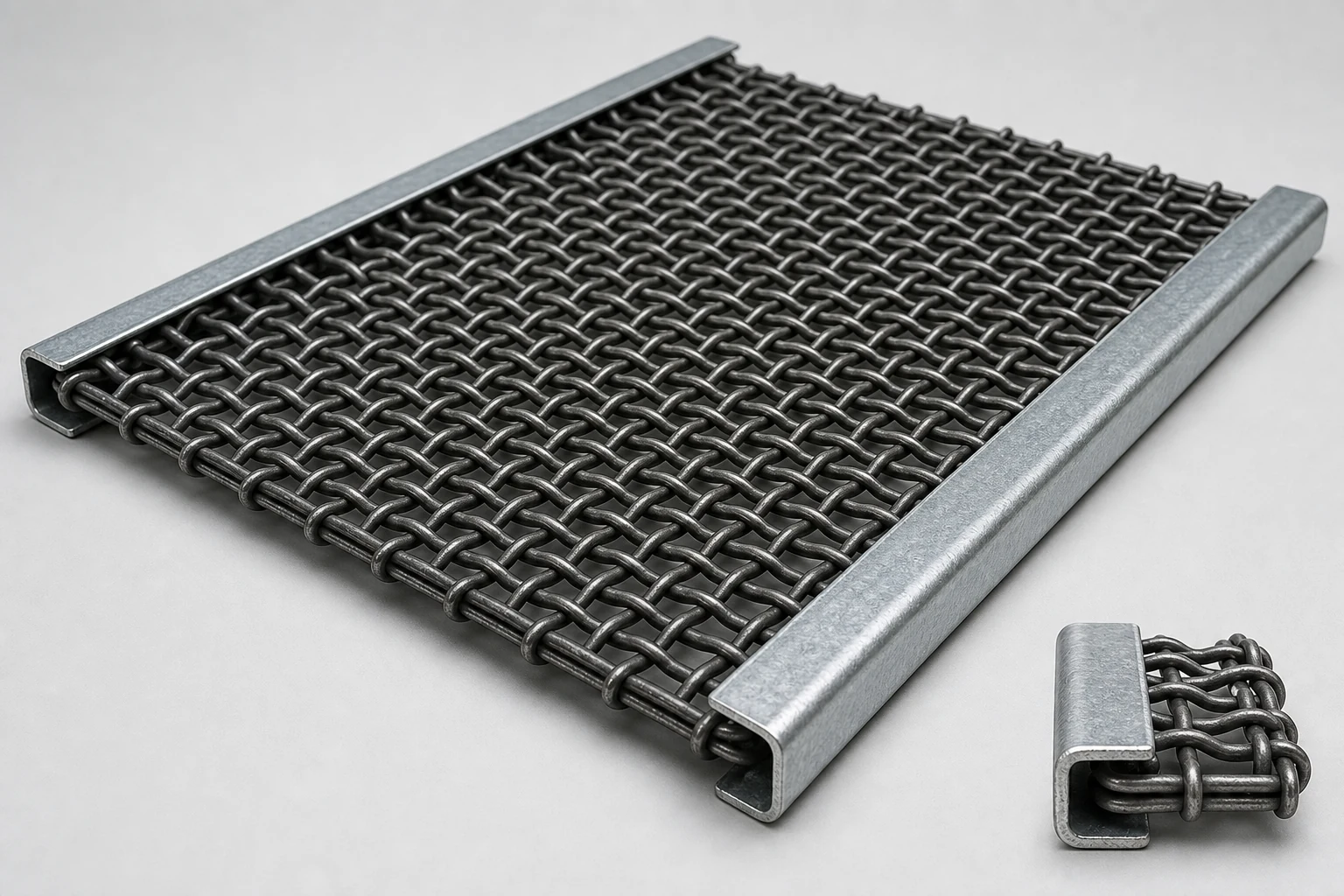
woven vibrating screen mesh panel with square apertures reinforced edge and tension hook

Quick answer

Buyer Summary

A vibrating screen mesh quote should identify the material being screened, target cut, nominal aperture, wire diameter, crimp style, panel width and length, flow direction, hook-edge profile and support layout. A drawing or verified sample is the safest way to match the screen deck.

Technical guide

Selection Points

Use these points to compare suppliers and send an RFQ with enough information for a useful reply.

01

Start with the screening duty

Aperture alone does not describe the required screen panel.

  • State the material, feed condition and target separation size.
  • Confirm whether square or rectangular openings are required.
  • Provide the flow direction and usable deck dimensions.
02

Match aperture, wire and crimp

These three details work together and should be reviewed as one specification.

  • Specify nominal aperture and tolerance.
  • Confirm wire diameter and material grade.
  • Name the crimp construction or provide a clear close-up or sample.
03

Define hooks, tension and support

The edge profile must fit the deck and tensioning system.

  • Send the hook drawing, fold direction and any rubber protection.
  • Confirm panel width, length and support-bar spacing.
  • Request labels that identify panel size, hook orientation and installation position.

Quotation data

Useful Data Before Quotation

RFQ Item What to Send Why It Matters
Screening duty Material, feed condition and target cut Sets the selection context
Aperture Nominal opening, shape, direction and tolerance Defines the required separation
Wire and crimp Material grade, wire diameter and weave construction Controls panel geometry and rigidity
Panel Finished width, length and flow direction Matches the usable deck area
Hook edge Profile drawing, fold direction and lining Matches the tensioning system
Support and packing Support spacing, labels and flat or rolled packing Protects fit and identification

Related products

Review product specifications and matching accessories before finalizing the RFQ.

Quarry Screen Mesh

Vibrating Screen Mesh

Woven screen panels specified by material, aperture, wire, crimp, deck dimensions and edge-hook geometry.

View specifications
Industrial Filter Mesh

Stainless Steel Mesh

Woven wire cloth specified by alloy, weave, mesh count, aperture, wire diameter and process duty.

View specifications
Wire Mesh Roll

Welded Wire Mesh

Square and rectangular welded mesh rolls for cages, fencing, guards, partitions and fabrication.

View specifications

FAQ

Common Buyer Questions

These answers help reduce repeated clarification before price, packing and delivery details are prepared.

Is aperture size enough to quote vibrating screen mesh?

No. The RFQ should also include wire diameter, material, crimp, panel dimensions, hook edge, support layout and screening duty.

Why should I send a hook-edge drawing or sample?

Hook depth, fold direction, lining and tensioning details vary by deck. A drawing or verified sample reduces fit errors.

Can vibrating screen mesh be supplied without hooks?

Yes, when the approved deck design uses flat, reinforced or another edge form. Confirm the final edge construction before production.

Technical RFQ

Send specifications for a comparable quotation.

Include product type, size, coating, quantity, accessories, destination country or port and reference photos if available.

WhatsApp
WhatsApp
WhatsApp
Scroll to Top